Staff Report
ISLAMABAD:
The government has decided to provide China-Pakistan Economic Corridor (CPEC) style security cover to Exploration and Production (E&P) companies operating in the country in a bid to tap the potential of local oil and gas reserves.
According to sources, the government, after consulting relevant stakeholders, has decided to give CPEC style security cover to E&P companies ostensibly to tap the oil and gas reserves situated in the country. They said that a special force will be formed for the security of E&P activities in the country which will be like security force of the CPEC projects. They said the government has decided to reform the gas sector and for this purpose a strategic workstream has been devised. The strategic workstream is divided into three parts: short term (6-12 months), medium term (2+years) and long term (3+ years), said sources.
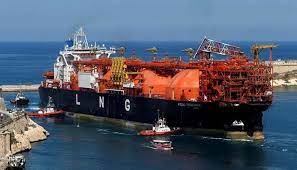
As per details, Special Assistant to the Prime Minister on Power & Petroleum Tabish Gauhar tweeted that under the short term strategic workstream in the gas sector, upto 300MMCFD (3+additional LNG cargoes per month) of excess capacity which is available at the existing terminals may be utilized on a strictly private-to-private i-e without any GoP (Government of Pakistan) “take or pay” payment obligation and on an open /third part access bases) to further bridge the demand-supply gap, especially in the coming winters for the domestic gas consumers, under a “without prejudice” arrangement sanctioned by Oil and Gas Regulatory Authority (OGRA). Similarly, a virtual LNG pipeline from Gwadar may be established in 6-12 months as few parties have proposed the government supplying up to 300MMCFD of LNG (again on a strictly private-to-private basis) to industrial customers via cryogenic road tankers from Gwadar. Aside from meeting industrial gas demand in and around Karachi (without the need to physically access the Sui’s pipeline network), this proposal may potentially make available the 150MMCFD of RLNG that Sui Southern Gas Company (SSGC) is currently retaining in their system and accordingly release the same to meet the deficit up north (in the Sui Northern Gas Pipelines Limited (SNGPL) system). Likewise, to remove the price anomaly between the price of indigenous and imported gas, and the associated adverse impact on the sector’s financial sustainability, the long-awaited “political consensus” on WACOG is expected to be reached, ideally before the year end. Furthermore, a new Liquefied Petroleum Gas (LPG) policy will be promulgated by end July (2021) to enhance/accelerate supply of this alternative fuel to domestic consumers and correspondingly reduce the burden on natural gas provision via pipeline network.
Under the medium term strategic workstream in the gas sector, two new merchant LNG terminals will be constructed as after a prolonged and facilitative exercise, it is hoped that the two new “merchant” LNG terminal developers will achieve financial close and start construction this year. However, the country needs at least one additional import terminals (without any “take or pay” commitment on the part of GoP by 2023. Similarly, for establishing on ground LNG storage infrastructure, use of GIDC (Gas Infrastructure Development Cess) funds (already collected) to start construction of on-ground LNG storage facilities at Port Qasim (up to 10 days storage in Phase-1 is proposed and OGRA has been finalizing third party access rules and substantial progress on this is expected by 2023. Furthermore, for North South Gas Pipeline, the government is likely to make substantive headway with the Russian consortium in the next couple of months on this additional Karachi to Lahore gas pipeline which is of critical importance to Pakistan’s energy security. As per PM’s directive, this infrastructure asset needs to be completed as soon as possible at a price affordable to the consumers and with a maximum involvement of our local companies, know-how and material.
Under the longer term (3+ years), the government is expected to remove impediments to accelerated natural gas drilling activities in the frontier regions of Balochistan and Khyber Pakhtunkhwa by a) processing available 2D seismic data (20%) surveying the remaining basins (80%) , and making the info available to all interested Exploration and Production (E&P) cost in a centralized “data repository”;
- b) providing “China-Pakistan Economic Corridor (CPEC) style” centralized security cover;
- c) transferring upstream regulatory functions from Petroleum Division to an independent authority (summary approved by the cabinet);
- d) conducting more frequent biddings encouraging “out of court” settlement on litigations, etc.
