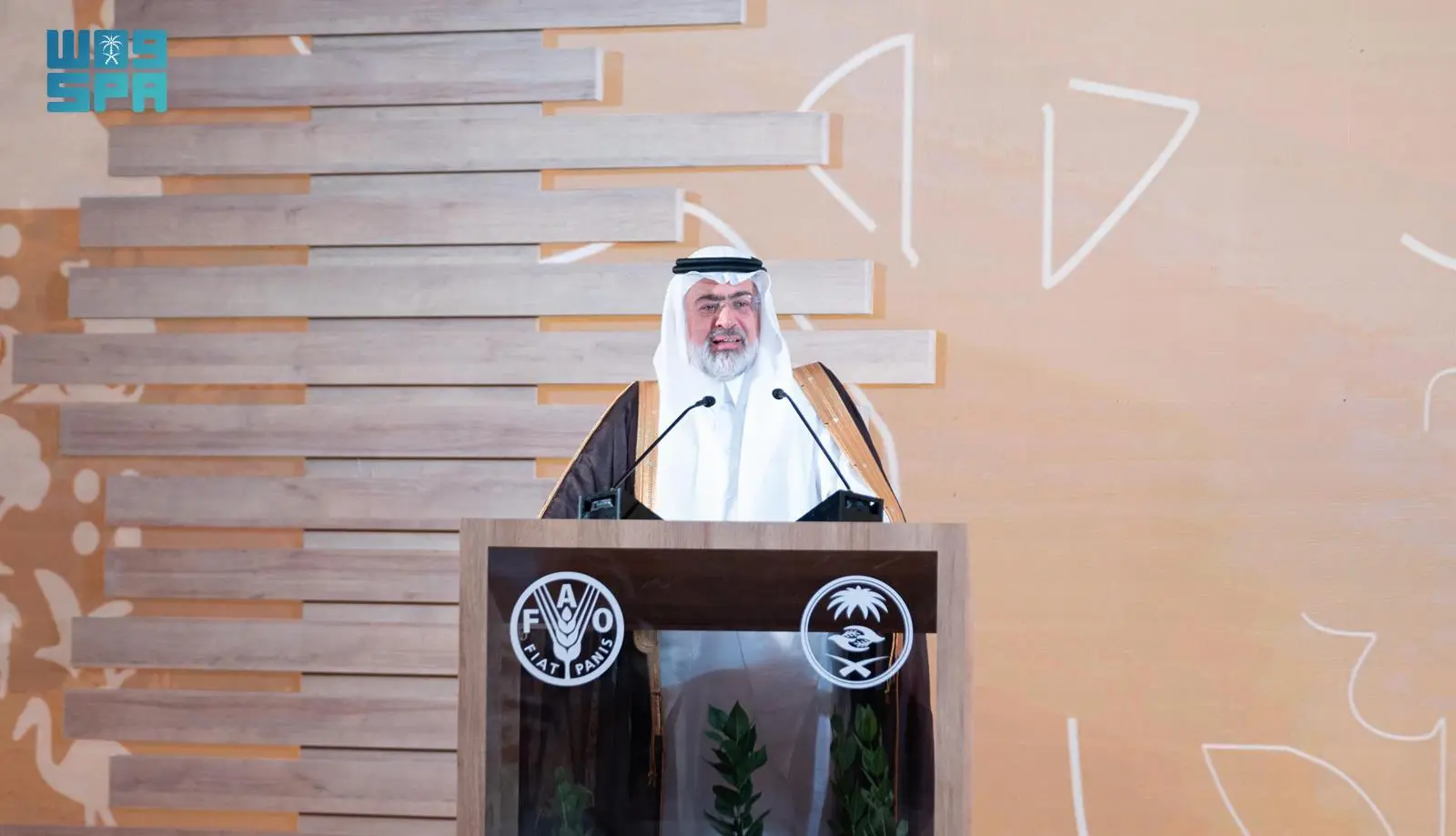
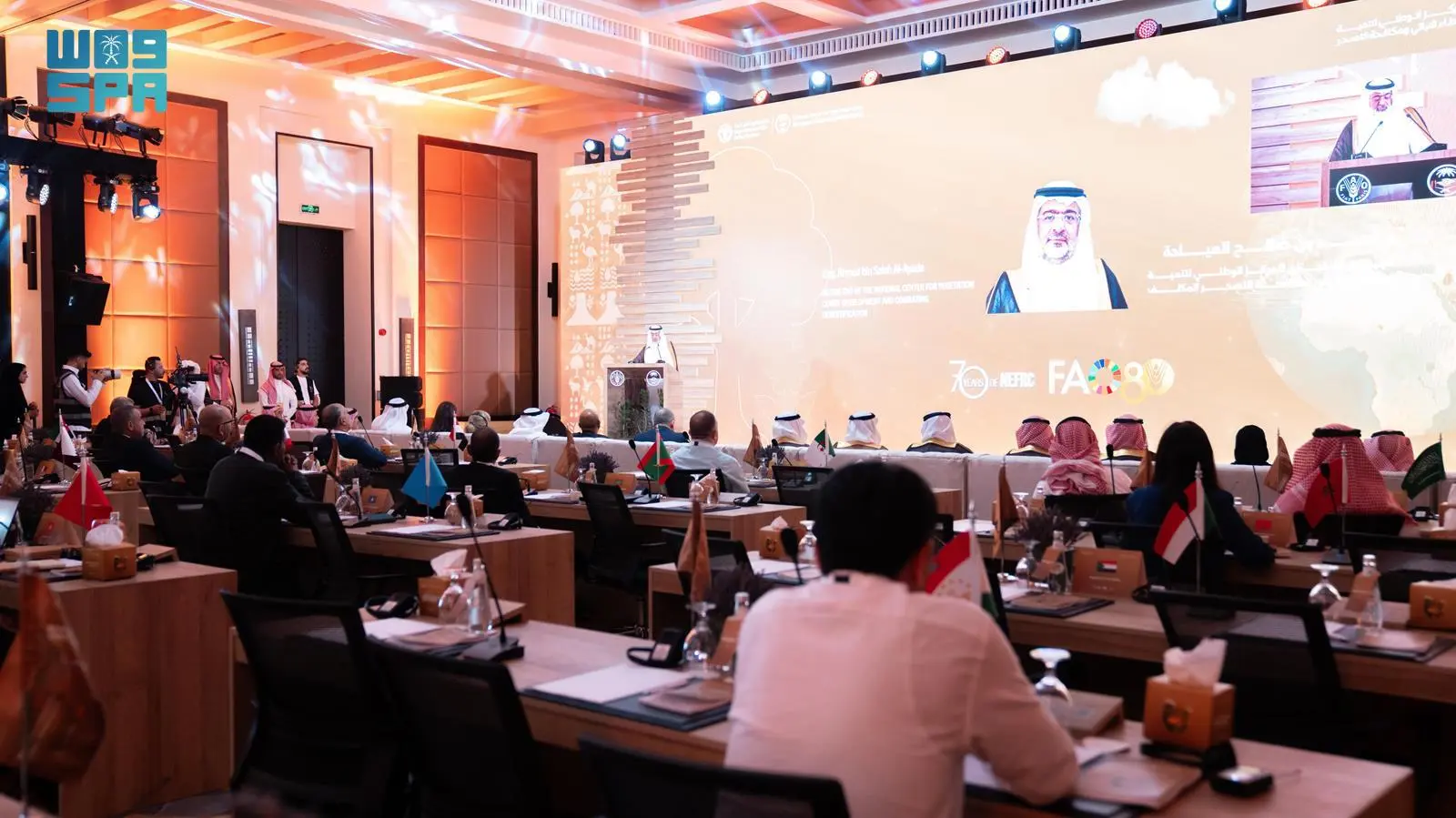
The 27th session of the Near East Forestry and Range Commission kicked off on MOnday in Jeddah, bringing together regional and international experts to address pressing environmental challenges.
The three-day event is hosted by the Kingdom of Saudi Arabia in collaboration with the Food and Agriculture Organization of the United Nations (FAO) and the National Center for Vegetation Cover Development and Combating Desertification (NCVC).
In his opening remarks, a representative from the NCVC highlighted the critical importance of forests and rangelands in the Near East region, noting that forested areas span over 42 million hectares, while natural pastures cover more than 303 million hectares. These resources, he emphasized, are essential for protecting biodiversity and sustaining the livelihoods of millions of people.
However, he warned that these vital ecosystems face serious threats from climate change, desertification, and land degradation.
“Globally, degraded land now accounts for 40% of the planet, directly impacting around 3.2 billion people,” the NCVC representative said. “This degradation could lead to a 30% rise in food prices, affect 75% of freshwater resources, and threaten over 50% of biodiversity through habitat loss, while also contributing to a 24% increase in carbon emissions due to the loss of vegetation cover.”
The representative underscored Saudi Arabia’s commitment to reversing these trends through ambitious initiatives such as the Saudi Green Initiative and the Middle East Green Initiative. These programs aim to plant 10 billion trees within the Kingdom, restore 40 million hectares of land, and plant an additional 50 billion trees across the region.
To date, 151 million trees have already been planted under the National Afforestation Program, while more than 505,000 hectares of degraded land have been rehabilitated through partnerships with various sectors.
The session will focus on advanced techniques and integrated solutions to maximize the role of forests and rangelands in combating climate change. Discussions will also address strengthening food systems and promoting sustainable rural development to support communities across the region.
