Monitoring Desk
The federal government is set to introduce a dual pricing regime in the upcoming budget, charging higher rates on cash transactions while incentivising digital payments — starting with the petroleum sector — as part of a wider campaign to curb the undocumented economy.
Sources told Dawn that in a landmark move under the Finance Bill 2025-26, petrol and diesel purchased with cash will cost Rs2–3 per litre more than digital payments. The measure aims to discourage cash-based transactions and lay the groundwork for a gradual shift towards a low-cash, and eventually cashless, economy.
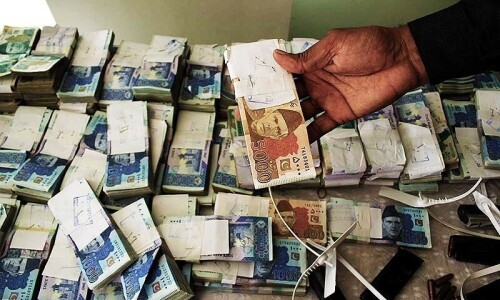
The policy forms part of Finance Minister Muhammad Aurangzeb’s broader “war on cash” strategy, which he has repeatedly flagged as essential to expanding the tax base, improving transparency, and tapping into over Rs9.3 trillion circulating outside the formal financial system.
“This is a regulated environment and the fuel sector is ready for such an intervention,” a senior official involved in the planning said. Petrol pumps across the country will be legally required to offer digital options — including QR codes, mobile wallets, and card payments — alongside cash.
Beyond fuel, the budget is expected to introduce an additional 2% General Sales Tax on cash-based transactions for importers, manufacturers, wholesalers, and retailers, on top of the standard 18% GST for digital payments.
“If businesses and their customers prefer cash, they’ll have to bear the additional cost. But the message is clear: digital is cheaper and preferred,” the official added.
Finance Minister Aurangzeb has held several rounds of consultations with the FBR, Ministry of Petroleum, commercial banks, and private digital solution providers to iron out implementation details. The dual pricing plan will be backed by legal cover in the Finance Bill, making it mandatory for all businesses to offer both digital and cash payment options — with a clear cost advantage for digital modes.
The initiative also supports a parallel legislative effort introduced in the National Assembly last month to digitally trace petroleum supplies from import to final sale, a move designed to curb smuggling and revenue leakages estimated at Rs300–500 billion annually.
While acknowledging past failures to document informal sectors such as marriage halls, private clinics, and jewellers, the government now appears determined to push through compulsory digitisation using both incentives and penalties.
In a recent public address, the finance minister admitted that tax evasion by non-filers and under-filers is costing the exchequer over Rs1.3 trillion annually, and claimed that Pakistan’s true economic size exceeds $700 billion — far higher than the current official estimate of $410bn.
“To bridge this gap, we must ensure end-to-end documentation. And for that, we have to break the cash economy,” he said.
As a symbolic gesture to the documented salaried class, the budget will likely include a modest 1 to 1.5 percentage point reduction in income tax, under instructions from the prime minister.
The 2025-26 federal budget, scheduled for presentation on June 10, is expected to feature several such bold steps aimed at shifting Pakistan’s economic trajectory towards digitisation, accountability, and formalisation.
