Petrol, diesel prices rise, adding to consumers’ fuel burden ISLAMABAD: The government has raised petrol and high-speed diesel (HSD) prices by Rs1.54 and Rs2.16 per litre, respectively, pushing up the cost of mobility and freight as consumers continue to grapple with high living expenses. According to a press release issued by the Petroleum Division on Monday, petrol will cost Rs379.25 per litre and HSD Rs395.82 per litre from October 27, compared with the previous rates of Rs377.71 and Rs393.66, respectively. The latest increase will directly affect millions of motorists, motorcyclists, public transport users and businesses dependent on road transportation. Petrol is widely used by private vehicle owners and motorcyclists, while diesel powers a significant portion of passenger transport, freight vehicles and agricultural machinery. The increase in diesel prices is particularly significant for the transport and logistics sectors, where fuel is a major operating expense. Higher freight costs could translate into additional pressure on the prices of food, consumer goods and other essentials if transporters and suppliers pass on the increased costs to buyers. The additional burden will also be felt by individual consumers. A motorist purchasing 20 litres of petrol will pay Rs30.80 more, while a buyer purchasing 50 litres of diesel will incur an additional expense of Rs108 at the revised rates. The Petroleum Division attributed the revision to changes in international market factors, including Platts prices, premiums and incidental charges. The latest adjustment comes amid persistent cost-of-living pressures, with households already managing expenses related to electricity, transportation, food and other necessities. Businesses reliant on fuel-intensive operations will also face higher costs, potentially affecting their pricing decisions. The revised prices will remain applicable from October 27 until the next scheduled review or any subsequent revision announced by the government.

by admin

ISLAMABAD: The government has raised petrol and high-speed diesel (HSD) prices by Rs1.54 and Rs2.16 per litre, respectively, pushing up the cost of mobility and freight as consumers continue to grapple with high living expenses.

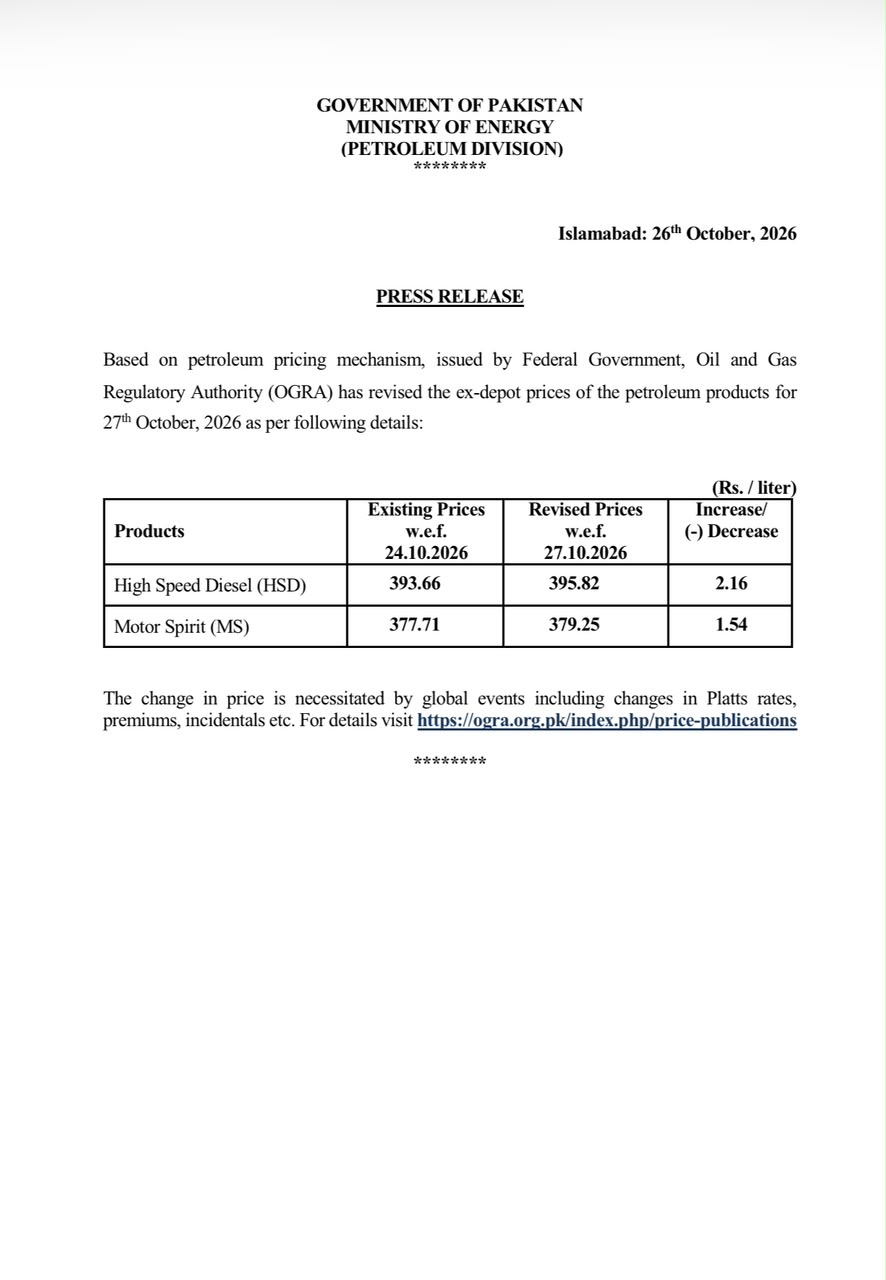
According to a press release issued by the Petroleum Division on Monday, petrol will cost Rs379.25 per litre and HSD Rs395.82 per litre from October 27, compared with the previous rates of Rs377.71 and Rs393.66, respectively.
The latest increase will directly affect millions of motorists, motorcyclists, public transport users and businesses dependent on road transportation. Petrol is widely used by private vehicle owners and motorcyclists, while diesel powers a significant portion of passenger transport, freight vehicles and agricultural machinery.

The increase in diesel prices is particularly significant for the transport and logistics sectors, where fuel is a major operating expense. Higher freight costs could translate into additional pressure on the prices of food, consumer goods and other essentials if transporters and suppliers pass on the increased costs to buyers.

The additional burden will also be felt by individual consumers. A motorist purchasing 20 litres of petrol will pay Rs30.80 more, while a buyer purchasing 50 litres of diesel will incur an additional expense of Rs108 at the revised rates.

The Petroleum Division attributed the revision to changes in international market factors, including Platts prices, premiums and incidental charges.

The latest adjustment comes amid persistent cost-of-living pressures, with households already managing expenses related to electricity, transportation, food and other necessities. Businesses reliant on fuel-intensive operations will also face higher costs, potentially affecting their pricing decisions.

The revised prices will remain applicable from October 27 until the next scheduled review or any subsequent revision announced by the government.

You may also like

Leave a Comment

This website uses cookies to improve your experience. We'll assume you're ok with this, but you can opt-out if you wish. Accept Read More