Monitoring Desk
ISLAMABAD:
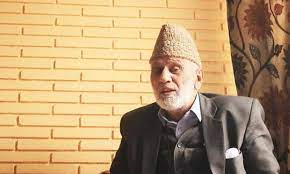
Senior Kashmiri leader Mohammad Ashraf Sehrai, who challenged India’s rule over occupied Kashmir for decades, died on Wednesday while in police custody. He was 78.
Sehrai was admitted to a government hospital with multiple ailments on Tuesday from a jail in the southern Jammu region, officials and his family said.
Sehrai’s son, Mujahid Sehrai, said his father was denied proper medical care while in jail. He said he spoke to his father 10 days ago and he complained of ill health.
“He told us several times in the last few months during his two phone calls a week to home that he was not getting proper medical treatment,” his son said. “We moved a court on April 16 with a petition seeking proper medical assistance for him but the court was yet to review it.”
Sehrai was arrested last July under the Public Safety Act, which allows authorities in occupied Kashmir to imprison anyone for up to two years without trial.
Last week, the All Parties Hurriyat Conference said it was concerned about the health of hundreds of Kashmiri political detainees as India faces a massive health crisis because of an explosion of coronavirus cases. It said the prisoners were being denied “even basic amenities”, leading to “serious health problems among the prisoners”.
India has arrested thousands of Kashmiris under the Public Safety Act since 1989, when an armed struggle erupted in occupied Kashmir seeking the region’s independence or merger with Pakistan. Rights groups say India has used the law to stifle dissent and circumvent the justice system, undermining accountability, transparency, and respect for human rights.
Sehrai was one of the staunchest supporters of Kashmir’s merger with Pakistan. He was head of Tehreek-e-Hurriyat and a member of the largest religious and political group, Jama’at-e-Islam.
He spent more than 16 years in various Indian jails in a political career that spanned nearly six decades. His son was killed in a gunfight with Indian troops in April last year in the region’s main city of Srinagar. He was a member of Kashmir’s main fighter group.
Mohamad Junaid, a New York-based Kashmiri political anthropologist, said “there is no difference between killing and actively creating the conditions of someone’s death.” In a tweet, he said, “When a state can’t take care of its own people, how could it ever look after the health of political dissidents it has declared as enemies and imprisoned?”
Sehrai was arrested last July under the Public Safety Act, which allows authorities in occupied Kashmir to imprison anyone for up to two years without trial.
Last week, the All Parties Hurriyat Conference said it was concerned about the health of hundreds of Kashmiri political detainees as India faces a massive health crisis because of an explosion of coronavirus cases. It said the prisoners were being denied “even basic amenities”, leading to “serious health problems among the prisoners”.
India has arrested thousands of Kashmiris under the Public Safety Act since 1989, when an armed struggle erupted in occupied Kashmir seeking the region’s independence or merger with Pakistan. Rights groups say India has used the law to stifle dissent and circumvent the justice system, undermining accountability, transparency, and respect for human rights.
Sehrai was one of the staunchest supporters of Kashmir’s merger with Pakistan. He was head of Tehreek-e-Hurriyat and a member of the largest religious and political group, Jama’at-e-Islam.
He spent more than 16 years in various Indian jails in a political career that spanned nearly six decades. His son was killed in a gunfight with Indian troops in April last year in the region’s main city of Srinagar. He was a member of Kashmir’s main fighter group.
Mohamad Junaid, a New York-based Kashmiri political anthropologist, said “there is no difference between killing and actively creating the conditions of someone’s death.” In a tweet, he said, “When a state can’t take care of its own people, how could it ever look after the health of political dissidents it has declared as enemies and imprisoned?”
