Staff Report
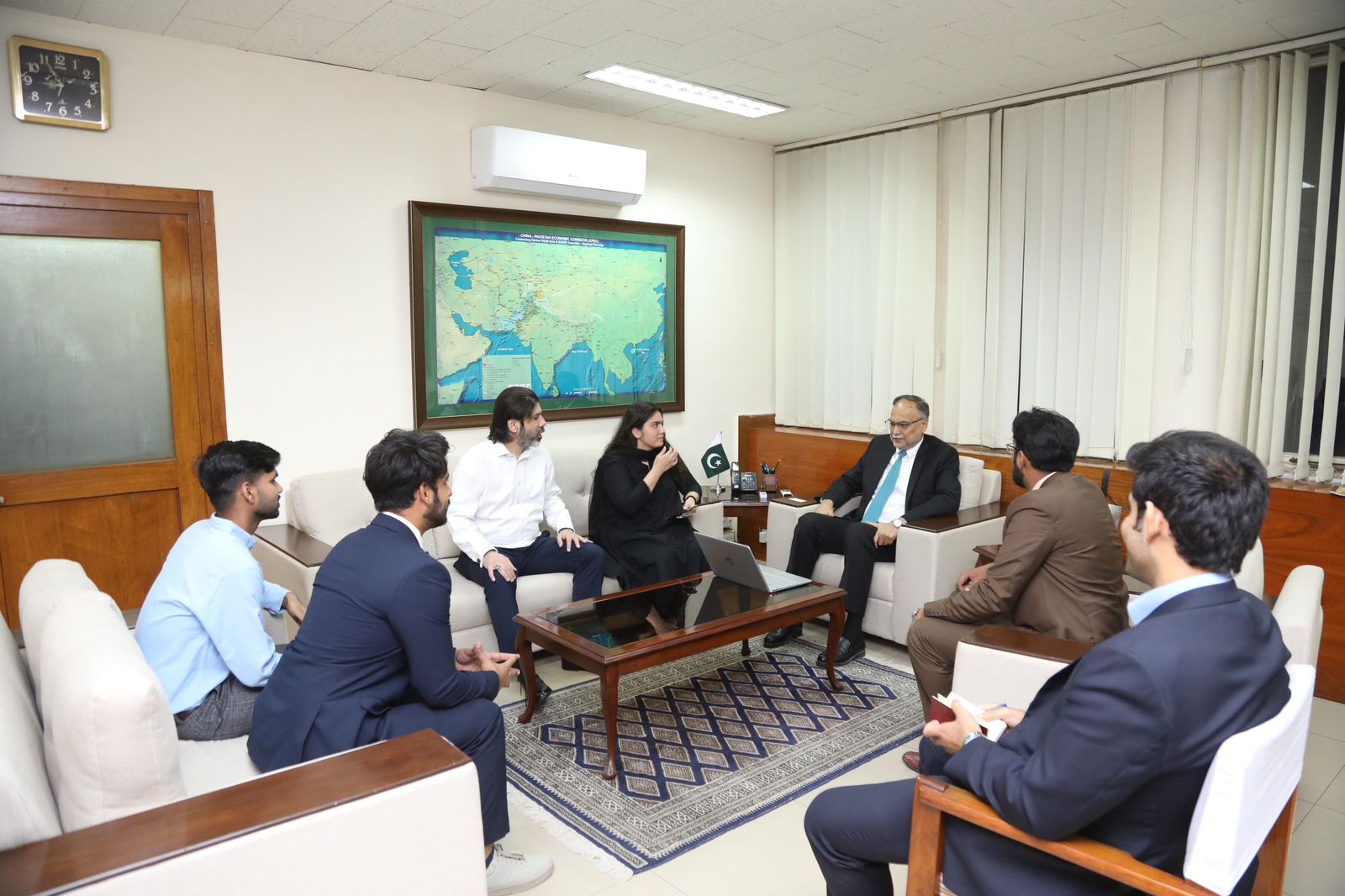
ISLAMABAD: A group of final-year Environmental Engineering students from the National University of Sciences and Technology (NUST) had the distinct honor of presenting their innovative project on treating fecal sludge through Decentralized Wastewater Treatment Systems (DEWATS) to Ahsan Iqbal, the Minister of Planning and Development.
The dedicated team, comprising Mahnoor Quddusi, Meer Taqi Ali, Muhammad Ahsan, and Ali Noor, has been working tirelessly to address critical sanitation challenges through sustainable waste management solutions. Their project, which focuses on the effective treatment of fecal sludge using DEWATS, represents a significant advancement in environmental engineering and public health.
During the meeting, the students highlighted the technical aspects and potential benefits of their project, emphasizing its capacity to improve sanitation and environmental conditions in underserved communities. They discussed how DEWATS can offer a cost-effective, efficient, and sustainable method for treating wastewater, thereby reducing health risks and promoting environmental sustainability.
Minister Ahsan Iqbal expressed his admiration for the students’ dedication and the innovative approach they have taken to tackle pressing sanitation issues. He acknowledged the importance of such projects in advancing Pakistan’s development goals and emphasized the government’s commitment to supporting young innovators and environmental sustainability initiatives.
“The insights and support from Minister Ahsan Iqbal are invaluable,” said Mahnoor Quddusi, speaking on behalf of the group. “His commitment to development and innovation in Pakistan has inspired us to continue pushing the boundaries in our field. We believe that our project can make a substantial impact on public health and environmental sustainability.”
The meeting with Minister Iqbal has further fueled the team’s motivation to drive positive change. They are now more determined than ever to implement their project and contribute to creating resilient, healthy communities across Pakistan.
This engagement underscores the vital role of young engineers and innovators in addressing the country’s developmental challenges. The NUST team’s project is a testament to the potential of academic research and practical solutions in fostering sustainable development.
As they move forward, the students plan to collaborate with various stakeholders to bring their project to life, hoping to set a precedent for future initiatives in sustainable waste management and environmental engineering. Their work not only highlights the innovative spirit of NUST students but also the broader impact of empowering youth to lead the charge in solving critical societal issues.
