Monitoring Desk
ISLAMABAD:
Pakistan on Tuesday reaffirmed its commitment to the current ceasefire understanding with India but warned that any future aggression would be met with full force. The Foreign Office issued a strong rebuttal to Indian Prime Minister Narendra Modi’s provocative speech delivered on May 12, denouncing it as inflammatory and misleading.
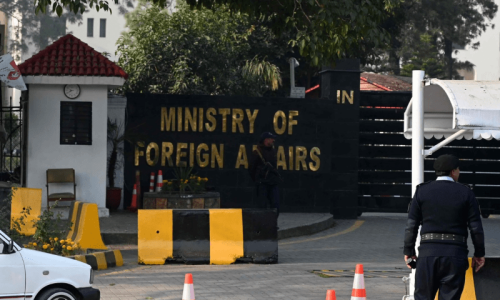
A statement from the Foreign Office said Pakistan categorically rejected the Indian premier’s “provocative and inflammatory assertions,” calling them a “dangerous escalation” based on misinformation and political opportunism. The remarks, it said, showed a blatant disregard for international law.
In his speech, Modi had accused Pakistan of launching retaliatory strikes against Indian military and civilian targets, claiming India’s air defence systems repelled the attacks and inflicted significant losses. He also asserted that Pakistan had requested a ceasefire through military channels on May 10 after what he termed a “failed retaliation.”
Pakistan called this version of events a “blatant lie” and maintained that the ceasefire was the result of facilitation by several friendly countries. Any claims to the contrary, the FO stated, were “misinformation and propaganda.”
Diplomatic and military channels between the two nations have since begun working on the operational aspects of the truce. The first post-ceasefire contact between the Directors General of Military Operations (DGMOs) resulted in a mutual agreement to uphold the ceasefire and reduce troop deployments along the international border. A second round of talks is expected shortly.
The FO further said the recent Pahalgam incident was used by India to justify military adventurism, inflame domestic political sentiment, and promote a narrative of a constant external threat. The statement added that India’s unprovoked targeting of Pakistani military sites risked escalating the situation into full-scale conflict.
“India’s actions brought the region dangerously close to disaster,” the FO warned, adding that such behavior cannot be normalized. It strongly condemned India’s attempts to portray the killing of innocent civilians as a new status quo.
On the issue of terrorism, Pakistan reiterated that it is a victim, not a sponsor, of terrorism—blaming India for direct support to anti-Pakistan elements. Islamabad also pointed to its recognized contributions in the global fight against terrorism.
Pakistan condemned Modi’s remarks about the Indus Waters Treaty and his statement that “water and blood cannot flow together,” terming such language a violation of international agreements. The FO warned that Pakistan would take all necessary measures to safeguard its rights under the treaty.
Modi also declared a policy shift, saying India would not engage in dialogue with Pakistan except on issues related to terrorism and Azad Kashmir. Responding to this, Pakistan said, “Peace is the true strength. The world is not served by theatrical militarism and grandstanding but by mature leadership and regional cooperation.”
Reaffirming its support for a peaceful resolution of the Kashmir dispute under UN Security Council resolutions, the FO asserted, “Our commitment to peace must never be mistaken for weakness. Any future aggression will also be met with full resolve.”
Meanwhile, Pakistani security forces shot down an Indian surveillance drone near Lahore airport using GPS jamming technology. Law enforcement sources said the drone was deployed by India after the ceasefire agreement.
The Indian Ministry of External Affairs responded by defending its military actions, claiming that its strikes had targeted terrorist infrastructure responsible for civilian deaths worldwide. It warned that the “new normal” would continue, urging Pakistan to accept it.
