Staff Report
ISLAMABAD:
Economic Coordination Committee (ECC) of the Cabinet is likely to approve the operational losses up to a maximum at 0.5per cent for gasoline transportation through White Oil Pipeline (WOP) and Mehmoodkot-Faisalabad-Machike (MFM) pipelines through Inland Freight Equalization Margin (IFEM).
Well-informed sources told NewsLite that ECC in its next meeting will take up a decision on a summary of the petroleum division, seeking approval to set operational losses up to a maximum at 0.5% for gasoline transportation through WOP & MFM pipelines through IFEM. And, the same will be adjusted against actual (zero sum process) based on physical inventory of pipelines to be undertaken periodically. However, if the actual losses in the first year are found higher than 0.5%, the case will be resubmitted before ECC for appropriate decision, said sources.
“Since the instant case pertains primarily to the transportation loss only to the extent of pipeline segment rather than all inclusive operational loss, petroleum division is of the opinion that based on international benchmarks used in USA, India, and Zambia/Tanzania, operational losses up to a maximum at 0.5% for gasoline transportation through WOP & MFM pipelines may be allowed through IFEM,” said the sources.
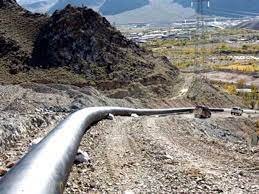
According to documents, currently, entire up-country demand of diesel is being transported from Karachi to Lahore through the White Oil Pipeline (WOP) and Mehmoodkot-Faisalabad-Machike (MFM) pipelines. Pak-Arab Pipelines Company Limited (PAPCO) and Pak-Arab Refinery Company Limited (PARCO), the pipeline operators, have been pursuing a project for converting the two pipelines from the present single product (diesel) to multiproduct (diesel & gasoline) one with an investment of around US $ 194 million. Similarly, Oil Marketing Companies (OMCs) have also made significant capital investments in storage tanks and its associated facilities at various delivery points along the pipeline. Project has been technically completed, while its commissioning is expected around June-July-2021.
The two retail fuels namely gasoline and diesel are currently distributed through the length and breadth of the country by tank lorries exclusively in case of gasoline (sales of around 7.4 million tons-10 billion liters in FY 2019-20) and combination of tank lorries & pipeline movements in case of diesel (sales of around 6.6 million tons-7.9 billion liters in FY 2019-20).
Gasoline is a volatile product with high evaporation rate, which results in significant working losses when handling the product. As such, the operational losses would be much higher in gasoline transportation as compared to diesel, due also to multiple handling of the product (from ship to storage tanks, to pipeline then off take at Shikarpur/ Mehmoodkot/Faisalabad/Machike storages as well as Intermix handling/reprocessing).
Oil Industry has stated that operational losses in pipeline transportation can neither be absorbed by OMCs nor by PAPCO/PARCO, out of their existing margins. It has therefore, been recommended that operational losses up to maximum of one percent for gasoline transportation through WOP & MFM pipelines should be included in Inland Freight Equalization Margin (IFEM) calculations. Since pipeline operators have to conclude transportation agreements with OMCs covering the provisions for operational losses, the issue needs to be resolved for recovery mechanism prior to commissioning of the multi-grade movement project.
It is also learnt from documents that primary movement of gasoline through pipeline, after accounting for 0.5% operational losses, would still result into a typical freight saving of Rs 3.38 per liter on the volumes to be moved in the main segment i-e Karachi to Mehmoodkot near Multan. And, the other ancillary benefits of this shift are: road safety, environmental pollution, efficient transportation, less congestion and reduced wear and tear of highways, which are not so easily quantifiable, but are significant.
“The Minister In charge for Petroleum Division has seen and authorized submission of the summary for seeking approval of the ECC of the cabinet,” said documents.
According to documents, the summary was circulated to the ministry of planning, development & reforms, Federal Board of Revenue (FBR) and Oil and Gas Regulatory Authority (OGRA) for their views/comments. And, OGRA in its comments said that “the summary does not prescribe any mechanism to assign the financial value to the volumetric issue for recovery”.
It is pertinent to mention here that There is no universal benchmark for operational loss tolerance in respect of gasoline transportation by pipelines and different percentage allowance have been witnessed in the international market, as summarized below:
- Local Customs Authorities provide an allowance of 1pc on account of evaporation and terminal handling losses
- Custom & Excise Department, Singapore allows 1% working losses for products with a flashpoint below 23 deg C as gasoline, LPG and aviation gasoline etc.
- US Army Regulations (para 6) in relation to allowable losses for bulk petroleum products provide transportation loss allowance of 0.5% of the quantity documented.
- Energy Regulation Board of Zambia/Tanzania provides terminal losses allowance (para-18) and transportation losses allowance (para-20) at 0.5% for gasoline.
- Government of India (Ministry of Finance) order dated 09-07-2013 (para 4.4) allows the transit loss in deliveries by pipeline to a maximum ceiling of 0.5% for motor gasoline.
- Results of PARCO Laboratory test on evaporation rate/physical behavior show that gasoline evaporation rate is around 11 times more than that of diesel. Accordingly, inference based on PAPCO’s actual experience factor at 0.06% for diesel works out to an estimated loss percentage at 0.66% for gasoline.
