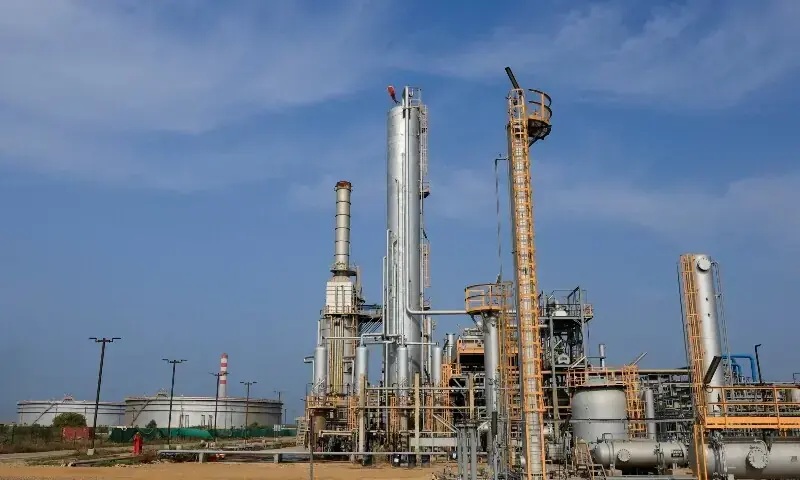
ISLAMABAD: Pakistan’s domestic refining sector is set for a major product-mix shift as four refineries sign around $5 billion upgrade agreements, targeting a 72pc increase in petrol production, 39pc rise in HSD and 63pc reduction in furnace oil.
Attock Refinery, National Refinery, Pakistan Refinery and Cnergyico Petroleum have entered into formal agreements under the Brownfield Petroleum Refining Policy 2026 to modernise their refining facilities and increase production of higher-value petroleum products.
Cnergyico CEO Amir Abbassciy said the agreement marked a long-awaited milestone for the country’s refining sector and reaffirmed the company’s commitment to completing its upgradation project.
According to Abbassciy, Cnergyico’s project has been structured into three phases, with the first aimed at producing Euro-V compliant fuels, the second at reducing fuel oil production and the third at enhancing refinery capacity.
PARCO is also expected to join the programme, with its Managing Director saying the company would sign the agreement within the stipulated timelines under the policy.
The agreements with the four refineries were signed with ISGS, the Petroleum Division subsidiary designated to execute the agreements and monitor implementation.
Usama Qureshi, Vice Chairman of Cnergyico, said the projected rise in petrol production from 10,700 TPD to 18,400 TPD represents the combined production target of existing domestic refineries after completion of their upgrade projects.
He said combined HSD production was projected to increase from 21,240 TPD to 29,520 TPD, while furnace oil production was expected to fall from 15,417 TPD to 5,714 TPD.
The projected changes would add around 7,700 TPD of petrol and 8,280 TPD of HSD production, while cutting furnace oil output by around 9,703 TPD.
Qureshi said the increase in domestic petrol production was expected to improve local availability and reduce dependence on imported refined petrol.
He, however, noted that the actual reduction in petrol imports would depend on domestic demand, refinery utilisation and timely completion of the projects.
The projected increase in HSD production is also expected to strengthen domestic diesel availability and reduce the requirement for imports, with transport, agriculture and industrial activities among the major consumers of the fuel.
The sharp reduction in furnace oil production represents another major element of the planned product-mix transformation. Refineries are expected to shift production towards petrol, HSD and other higher-value products while reducing output of furnace oil.
The policy provides fiscal and tariff incentives to support the investments. Industry sources said eligible refineries would receive 10pc tariff protection on imported petrol and diesel for seven years, with incremental tariff protection deposited into dedicated upgrade accounts managed by ISGS.
The industry has also clarified that the policy provides a 2.5pc incremental tariff protection on HSD and a 10pc incremental incentive on petrol, with these funds intended to support approved refinery modernisation projects.
The existing 7.5pc deemed duty on HSD would continue for the specified 20-year period or until deregulation, whichever occurs earlier, according to industry sources.
The upgrade projects are expected to enable production of Euro-V compliant fuels, reduce furnace oil production and improve the ability of domestic refineries to supply petroleum products to the local market.
The Brownfield Petroleum Refining Policy 2026 was approved by the Cabinet Committee on Energy on July 28, 2026 and provides a framework for fiscal incentives, tariff protection, foreign exchange arrangements and other measures to facilitate refinery modernisation.
Under the policy, refineries may sell their products to any Ogra-licensed OMC and may export surplus production relative to domestic demand, subject to the required approvals.
The Petroleum Division is also required to notify Euro-V specifications within one month of signing the agreements, marking a further step towards cleaner fuel standards in the domestic market.
The scale of the planned investment and projected change in production indicates a significant restructuring of Pakistan’s domestic refining capacity, although the eventual impact on fuel imports and market supply will depend on the timely completion and utilisation of the upgraded facilities.
