Monitoring Desk
ISLAMABAD: Israeli airstrikes pounded Gaza early Tuesday, killing at least 200 people, including many children, according to Palestinian health officials. The renewed military offensive follows the collapse of a ceasefire agreement that had temporarily halted hostilities since January.
The Israeli military confirmed targeting multiple locations, including Gaza City, northern areas, and key southern and central regions such as Deir al-Balah, Khan Younis, and Rafah. Military officials stated that the strikes aimed at Hamas leadership and infrastructure, with operations set to continue indefinitely.
Ceasefire Breaks Down Amid Hostage Standoff
Hamas accused Israel of violating the truce, warning that the fate of 59 hostages still held in Gaza was now uncertain. In response, Israeli Prime Minister Benjamin Netanyahu’s office blamed Hamas for rejecting all mediation efforts, including proposals by U.S. President Donald Trump’s Middle East envoy, Steve Witkoff.
“Israel will now act against Hamas with increasing military force,” Netanyahu’s office declared in a statement.
The White House confirmed that Israel had consulted Washington before carrying out the strikes, which reportedly targeted mid-level Hamas commanders, key leadership figures, and militant strongholds.
Failed Diplomacy Leads to Renewed Fighting
Negotiations between Israel and Hamas had been ongoing in Doha, with Egypt and Qatar acting as mediators. The initial ceasefire, brokered on January 19, had resulted in the release of 33 Israeli and five Thai hostages in exchange for around 2,000 Palestinian prisoners.
Israel had pushed for an extended truce lasting beyond Ramadan and Passover in April, in exchange for the return of the remaining hostages. However, Hamas insisted on broader negotiations for a permanent ceasefire and a full Israeli withdrawal from Gaza.
“We demand that the mediators hold Netanyahu and the Zionist occupation fully responsible for violating the agreement,” Hamas said in a statement.
Despite previous tensions, both sides had largely adhered to the ceasefire terms. However, Israel had repeatedly warned that it would resume military action if Hamas failed to release the remaining captives.
Intensified Strikes Worsen Humanitarian Crisis
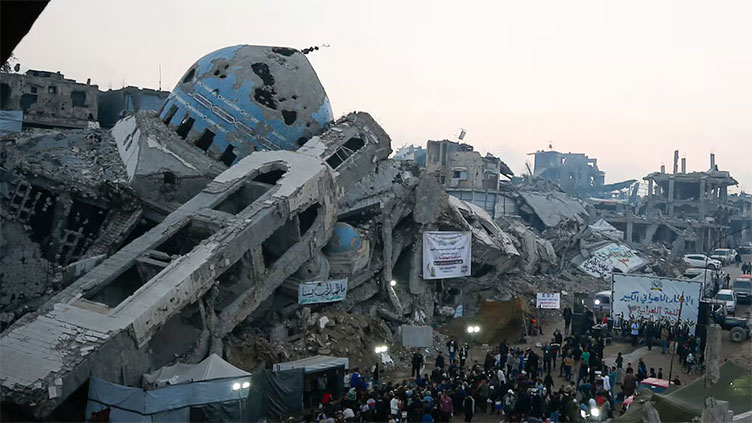
Palestinian health authorities and local witnesses reported widespread devastation, with entire residential blocks flattened in Gaza City, Deir al-Balah, Khan Younis, and Rafah. Medics counted at least 35 airstrikes overnight, describing the bombardment as one of the most severe in months.
The 15-month-long war began after the October 7, 2023 Hamas-led attack on Israeli communities, which killed approximately 1,200 Israelis and saw 251 hostages taken into Gaza. In response, Israel launched a relentless military campaign, which Palestinian health officials say has killed more than 48,000 people and left Gaza’s infrastructure in ruins, including its hospitals and basic services.
With humanitarian conditions worsening, hundreds of thousands of displaced Palestinians remain in makeshift shelters, struggling to access food, clean water, and medical aid as Israeli bombardment intensifies.
Dimming Hopes for Peace
The resumption of large-scale hostilities has cast serious doubt over future diplomatic efforts. Despite U.S. and Arab mediation, neither side appears willing to make concessions. Israel remains focused on eliminating Hamas leadership, while Hamas demands a permanent ceasefire and Israel’s full withdrawal from Gaza.
As violence escalates, fears grow that the conflict could drag on indefinitely, further destabilizing the region and worsening the humanitarian catastrophe in Gaza.
