Monitoring Desk
ISLAMABAD: The country’s top civilian and military leadership is set to convene at Parliament House today for a high-stakes security meeting, with crucial decisions expected on counterterrorism measures, particularly in Khyber Pakhtunkhwa and Balochistan.
Sources indicate that the Parliamentary Committee on National Security may take significant steps to curb the escalating threat of terrorism. The meeting will bring together Prime Minister Shehbaz Sharif, Chief of Army Staff General Asim Munir, federal ministers, provincial chief ministers, parliamentary party leaders, and members of the standing committees on Defence and Foreign Affairs from the National Assembly.
The in-camera session will be conducted under extraordinary security arrangements, following intelligence reports of potential threats in Islamabad. In an unprecedented move, media personnel have been barred from Parliament House for the day, with their press cards temporarily deactivated. Additionally, mobile phones will not be allowed inside the National Assembly Hall during the briefing.
Security Meeting Follows Surge in Attacks
This crucial meeting comes in the wake of a series of deadly attacks, including the recent hijacking of the Jaffar Express in Bolan, which resulted in at least 31 casualties. Khyber Pakhtunkhwa has also witnessed a rise in militant attacks, with police and security forces frequently targeted.
According to a statement from the National Assembly Secretariat, the session will include detailed discussions on the country’s security situation, with insights from both civilian and military leadership.
PTI Seeks Consultation with Imran Khan
The Pakistan Tehreek-e-Insaf (PTI) has confirmed its participation in the security meeting, with spokesperson Sheikh Waqqas Akram stating that the party will present its perspective on national security.
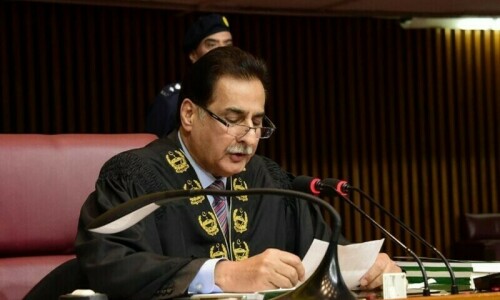
However, PTI has formally requested a meeting with its jailed founder, Imran Khan, before the session. In a letter to NA Speaker Ayaz Sadiq, PTI leader Omar Ayub stressed that consulting Imran Khan was crucial for the party’s informed and meaningful participation in the discussion.
“To ensure a well-informed and constructive contribution to national security matters, consultation with Imran Khan is of utmost importance,” the letter stated, requesting an urgent meeting with Khan before the security briefing.
While PTI had previously demanded that Imran Khan be invited to the meeting, Defence Minister Khawaja Asif rejected the request, urging PTI to set aside “personal interests” and focus on broader national security concerns.
He emphasized that political unity was essential for ensuring stability and called on leaders to strengthen engagement with local communities, particularly in Balochistan, to address longstanding grievances.
Senate Representation and Call for Revised National Action Plan
Meanwhile, PPP leader Raza Rabbani has called for greater representation of the Senate standing committees on Defence and Foreign Affairs in the security discussions.
He stressed that terrorism disproportionately affects Balochistan and Khyber Pakhtunkhwa, making it essential for the Senate—the House of Federation—to have a strong role in these discussions.
Mr. Rabbani also proposed a revised National Action Plan (NAP), arguing that the original 2014 NAP and its 2021 revision no longer reflect the evolving security landscape. He underscored that achieving lasting peace in Balochistan requires addressing local grievances, control over natural resources, and greater political autonomy.
High-Stakes Decisions Expected
With Pakistan facing a resurgent wave of terrorism, today’s meeting is expected to outline a new security strategy to counter the growing threats. A stronger, more coordinated approach involving both civilian and military leadership is anticipated as the country braces for the challenges ahead.
