Monitoring Report
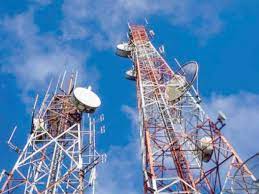
The Ministry of IT & Telecom (MoITT) has finalized the draft of first ever Telecom Infrastructure Sharing Framework allowing the telecom companies to install equipment on each other’s towers to run their businesses.
As per details, MoIT&T, after necessary consultation with the stakeholders, has uploaded the draft of Telecom Infrastructure Sharing Framework on its website and open for feedback from stockholders for15 days, after which it will be forwarded to the federal cabinet for its approval.
According to the MoIT&T, the telecom companies will be able to install their equipment/machinery on each other towers to run their business while international telecom companies will also be able to install their towers for provision of better services. The infrastructure sharing framework will help reduce operational and maintenance expenses of the telecom companies.
The IT Minister Amin ul Haq said that billion rupees revenue would be generated/saved with the installation of new towers and the infrastructure sharing would promotes resource optimisation by better utilisation of assets, avoiding duplication of network infrastructure, saves time & costs and accelerate service rollouts. Similarly, the telecom companies would be able to utilize their expenses on system upgradation instead of tower maintenance while network problems would be resolved with the upgraded system. Furthermore, minimum towers will impact positive on the environment.
According to sources, telecom network deployment involves heavy capital expenditure (CAPEX) and operational expenditure (OPEX) for operators and is considered as a major deterrent for network expansions. They said that the consultation process was initiated by the authority to encourage sharing of infrastructure and incentivize and facilitate high quality telecom infrastructure development in the country in October 2020. The consultation process spread over two years, said sources.
The working paper of the framework prepared by the ministry highlights several challenges faced by mobile operators as well internet service providers to expand their businesses such as delays in rolling out new network infrastructure, due to procuring Right of Ways (RoW), the operational cost, maintenance cost & Average Revenue Per User (ARPU) etc will be addressed by the new framework.
The MoITT paper has said that infrastructure sharing enables operators to focus on the competition in the service layer regardless of the extent of the sharing.
The ministry maintains that the savings can facilitate mobile operators’ migration to next generation technologies.
The working paper of the framework has highlighted that infrastructure sharing enables operators to focus on the competition in the service layer regardless of the extent of the sharing.
“It shall also facilitate domestic & Foreign Direct Investment (FDI),” the ministry has maintained.
The framework has identified two kinds of infrastructures- the Active infrastructure sharing involves sharing the electronic network components including the Operational Support System (OSS), Business Support System (BSS), fiber and radio networks etc, while the other one is Passive Infrastructure Sharing that are physical sites, buildings, premises, tower, power supply, battery, diesel, air-conditioning, etc.
The working paper of the framework has given example of a study conducted in some European countries that the sharing arrangements indicates significant cost-savings that is up to 35 and 45 percent for both Passive and Active infrastructure sharing.
It has been highlighted that sharing of infrastructure will help the environmental sector too due to reduced emissions and adding to the reduction in number of towers will add to the beauty of cities.
At the same time the customers too will benefit with provisions of new & innovative services, improved coverage compared to few operators who have limited capability, the ministry maintains.
