Monitoring Desk
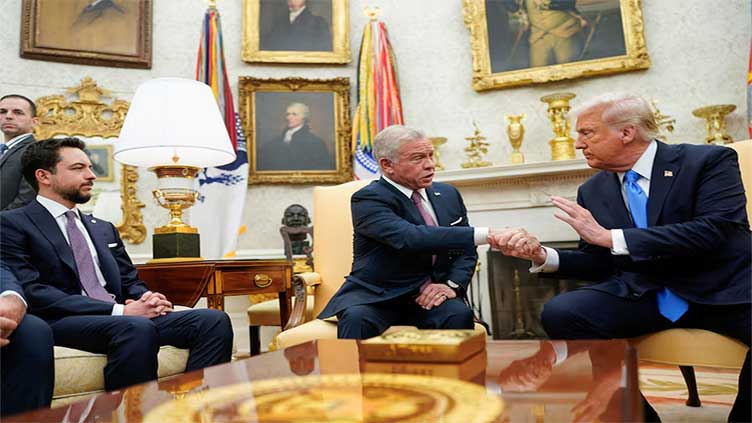
In a recent meeting at the White House, President Donald Trump pressed Jordan’s King Abdullah II to accept Palestinians displaced from the Gaza Strip as part of a U.S. plan to redevelop the area. Trump’s proposal involves relocating Gaza’s residents to neighboring countries and transforming the war-torn territory into a prosperous region.
Despite Trump’s insistence, King Abdullah reiterated Jordan’s steadfast opposition to any displacement of Palestinians. He emphasized that rebuilding Gaza without relocating its inhabitants should be the international community’s priority. “This is the unified Arab position,” the king stated, underscoring the consensus among Arab nations against forced resettlement.
Trump expressed confidence that both Jordan and Egypt would eventually agree to host displaced Gazans, noting their reliance on U.S. economic and military aid. However, he clarified that he was not using this support as leverage. “We contribute a lot of money to Jordan, and to Egypt by the way—a lot to both. But I don’t have to threaten that. I think we’re above that,” Trump remarked.
King Abdullah has consistently rejected any plans involving the annexation of land or the displacement of Palestinians, viewing such moves as existential threats to regional stability. Jordan, already home to a significant Palestinian refugee population, fears that accepting more could alter its demographic balance and exacerbate internal tensions.
The meeting highlighted the deep divisions between U.S. ambitions and regional perspectives on the future of Gaza. While Trump envisions a transformed Gaza contributing to Middle Eastern stability, Arab leaders remain cautious, prioritizing the rights and wishes of the Palestinian people.
This development comes amid heightened tensions in the region, with ongoing conflicts and complex geopolitical dynamics influencing international relations. The international community continues to watch closely as these discussions unfold, recognizing their potential impact on the broader Middle East peace process
